Role: Localizer

Game Dialogue System Implementation - Unity 3D

— 01

Abstract

This section is drawn from a desert-themed walking simulator I developed independently, with a complete trilingual (Chinese/English/Japanese) localization system built on Unity Localization and Yarn Spinner.

Abstract

— 02

Terminology & Editorial Decisions

Across narrative, UI, and onboarding content, I follow three editorial principles:

  • Consistency — one term, one translation, tracked across every instance.
  • Register discipline — tone and phrasing matched to content type, not applied uniformly.
  • Cultural naturalness — grounded in the phrasing conventions of Chinese game and drama writing, with attention to how a line reads aloud, not just how it reads on the page — laying the groundwork for voice-over work down the line.
Content Type Term / Case Localized As Editorial Rationale
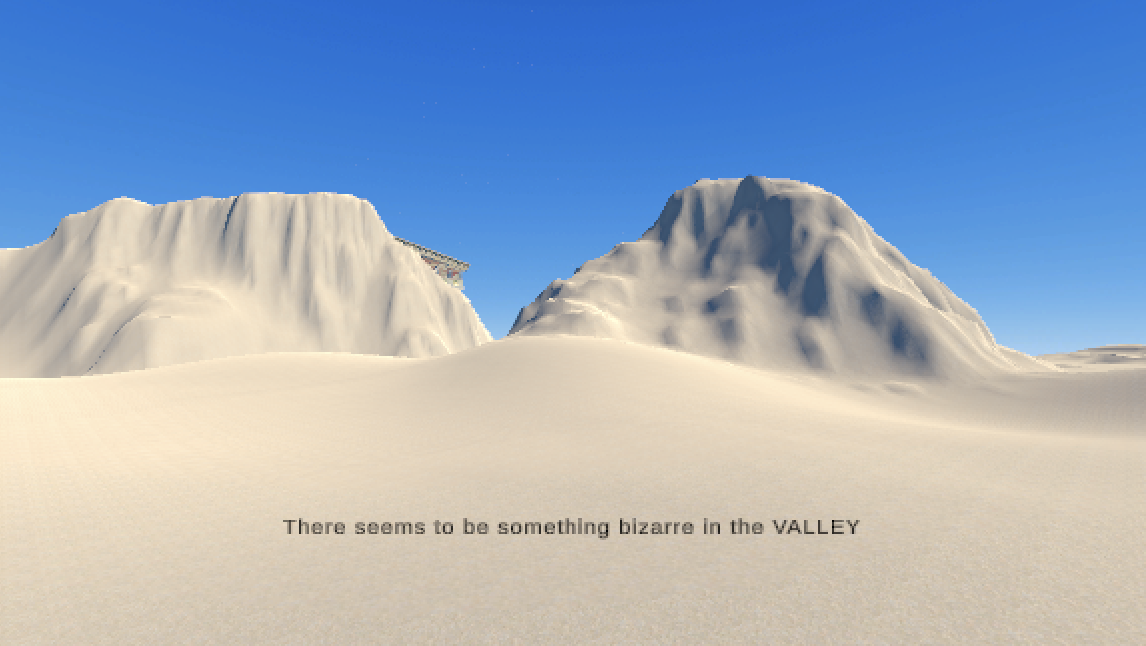
Narrative Sand hill 沙丘 Standardized across all instances to avoid inconsistent renderings (e.g. 沙山, 沙堆) that would fragment the player's mental image of the environment.
Narrative SOMETHING (capitalized for emphasis) 是不是 (softened interrogative) Chinese typography has no direct equivalent for capitalization-as-emphasis. Bold text and emphasis marks were considered and rejected as too visually intrusive for a first-person internal monologue; a hesitant question particle was chosen instead to preserve the intimate, unspoken quality of the line.
UI / System PAUSED / RESUME / RESTART 暂停中 / 继续游戏 / 重新开始 UI verbs follow a consistent verb + object structure rather than bare verbs, prioritizing clarity and length consistency across the pause menu over narrative texture.
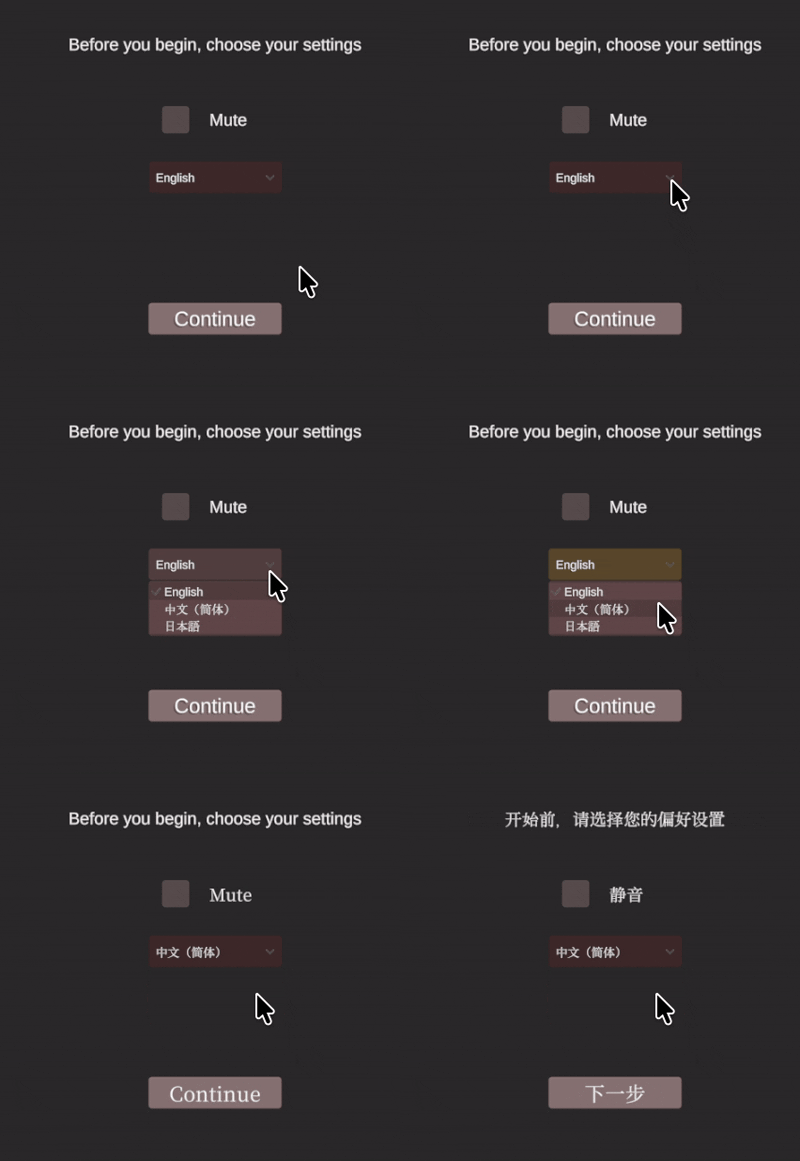
Tutorial / Onboarding Before you begin, choose your settings 开始前,请选择您的偏好设置 Adopted the polite register (您) typical of onboarding flows in Chinese software and games, distinct from both the intimate first-person narrative voice and the terse imperative style of UI buttons — signaling a shift from "player as character" to "player as user" being addressed directly.
— 03

Unity in-game localization implementation

Working directly in the implementation layer also shaped how I approached translation.
A few constraints that fed back into editorial decisions:

Text length across scripts

UI elements and dialogue boxes sized for English text don't guarantee the same fit once translated. I weighed length against phrasing quality and tone case-by-case — UI labels had little room to negotiate, while narrative lines could flex if the layout allowed.

CJK font rendering

A dynamic atlas bug in a recent Unity LTS version forced a fallback to static atlas mode to keep Chinese and Japanese glyphs rendering correctly.

Unity in-game localization implementation

— 04

Feeding Back into Engineering Decisions

Beyond translating and reviewing text, part of this role is surfacing process-level observations to the engineering side — flagging where the localization workflow itself could be improved to support better outcomes for both the game and the people building it.

The limits of manual overflow checking

Catching overflow through manual QA works at small scale, but fixed-size text boxes have a hard ceiling — as content volume grows and more languages are added, checking every line by hand isn't sustainable. This is a case where I'd raise the conversation with engineering: whether automated overflow detection, or text boxes that can flex within a defined range, are worth building into the pipeline going forward.

A long-term cost behind a short-term fix

The static atlas mode used to fix CJK glyph rendering (see previous section) solves the immediate problem, but it comes with a trade-off that only grows more expensive over time: every character the game might ever need has to be pre-rendered, rather than generated on demand — meaning build size scales directly with the size of the CJK character set. This isn't something that needs fixing today, but it's the kind of cost I'd want an engineering team to be aware of before it becomes one, especially on a size-sensitive platform like WebGL.

— 05

The Sequence in Full

Two moments from the full narrative arc, shown here in context rather than as isolated examples — from the uncertainty of the opening scene to the tonal shift on arrival at the sanctuary.

Opening — The Desert

# 中文 English 日本語
01 你在沙漠中醒来,孤身一人,眼前只有无尽的沙丘 You wake up in a desert, alone, with only a sand hill in front 目が覚めると、見渡す限りの砂漠だった。一人きりで、目の前には砂丘があるだけ
02 那山丘上的像是遗迹...过去看看吧 There are ruins up on the hill...try to go closer. 丘の上に遺跡が見える……近づいてみよう
03 山后面是不是有什么? SOMETHING is behind the hill, isn't it? 丘の向こうに、何かがある気がする
04 听见风声了吗?朝着风来的方向前进吧 Did you Hear? Head to where the wind came. 聞こえたか?風が吹いてきた方へ向かおう
05 再往前走可不是个好主意 It is not a good idea to go further. これ以上進むのは、得策ではないかもしれない
06 直觉告诉我该回头了 My instinct tells me to turn back. 直感が、引き返せと告げている
07 忘了吗?你可没学过游泳... Did you forget? You never learnt how to swim... 忘れていないか?泳ぎ方を知らないということを...

The tone shifts on arrival — from hesitant internal monologue to something closer to awe and invitation.

Arrival — The Sanctuary

# 中文 English 日本語
01 就是这儿。好壮观的建筑......这是个神庙吗? Here it is. What a marvellous building...is it a sanctuary? ここだ。なんと荘厳な建物だろう……これは聖域なのか?
02 欢迎来到时间的尽头 Welcome to the end of time. 時の終わりへ、ようこそ
03 请尽情探索 Feel free to wander around, 好きなだけ歩き回るといい
04 直到存在这件事情也失去意义... before the idea of existence lost its meaning... 「存在」という概念が意味を失う前に